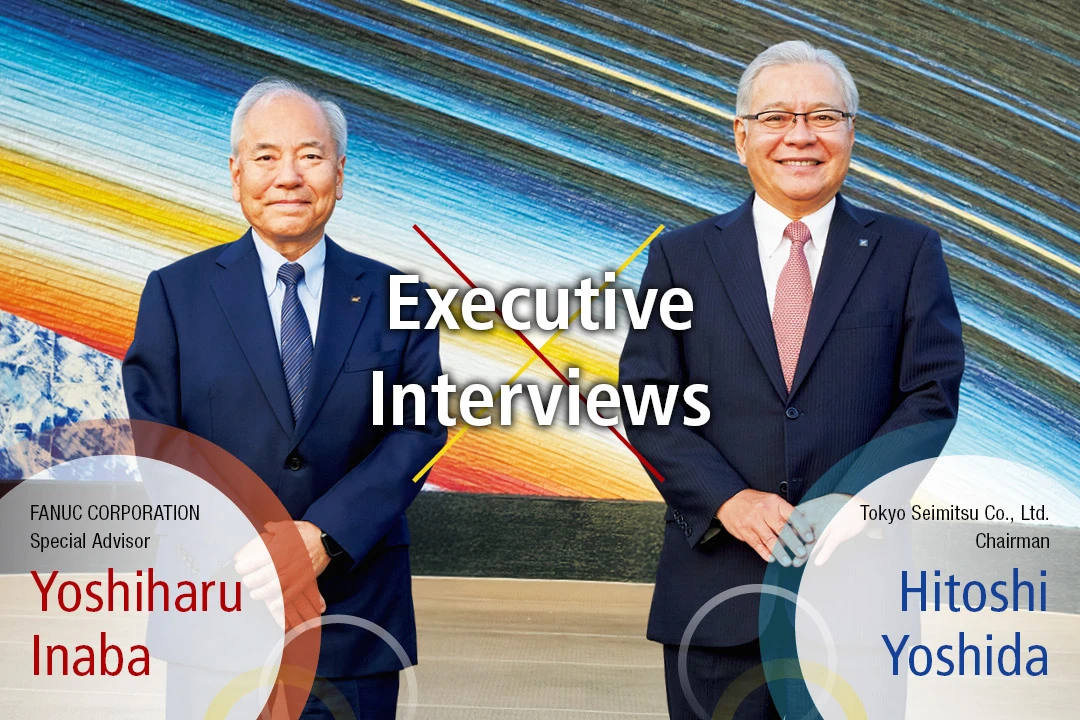
Foundation as an engineer
Manufacturing perspective formed during childhood and school days
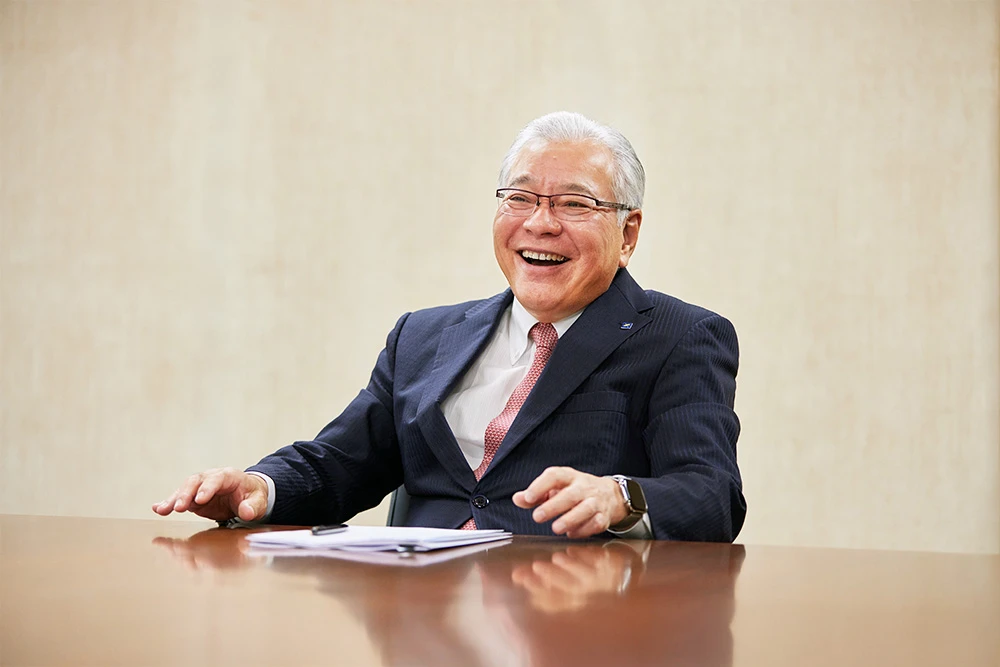
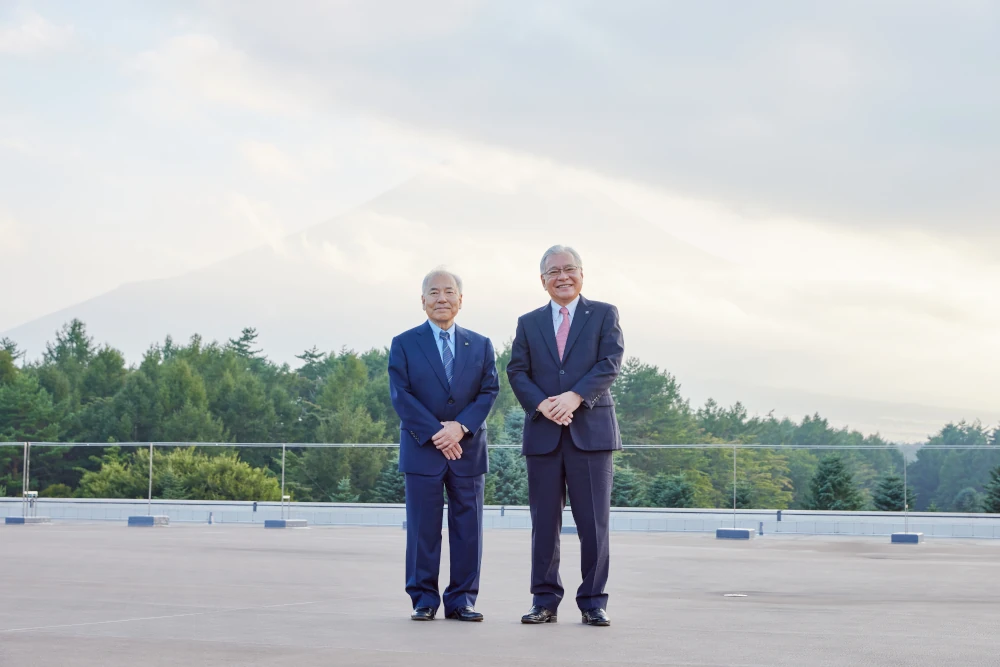
Yoshida
Let me begin by asking you about how your background and upbringing have influenced your current way of thinking.
Inaba
I was born in Chikusei City, Ibaraki Prefecture, and my family moved to Musashi-shinjo in Kawasaki City, Kanagawa Prefecture soon after. A Fujitsu engineer named Toshio Ikeda lived next door, and he would recruit me to help him build model kits almost every day. That's when I got a firsthand look at the repeated process of prototyping, testing, and improvement, and it may have formed the foundation of manufacturing for me.
Yoshida
What is your most memorable experience from your school days?
Inaba
What stands out in my memory is university protests. Soon after I enrolled, the university was shut down and there were no classes in the following six months. I spent most of the time playing mahjong or playing in a band. It was like what we experienced during the COVID-19 pandemic. But, while online classes are available today, we didn't have smartphones or the internet back then.
Ten years of shaping a foundation as an engineer
Yoshida
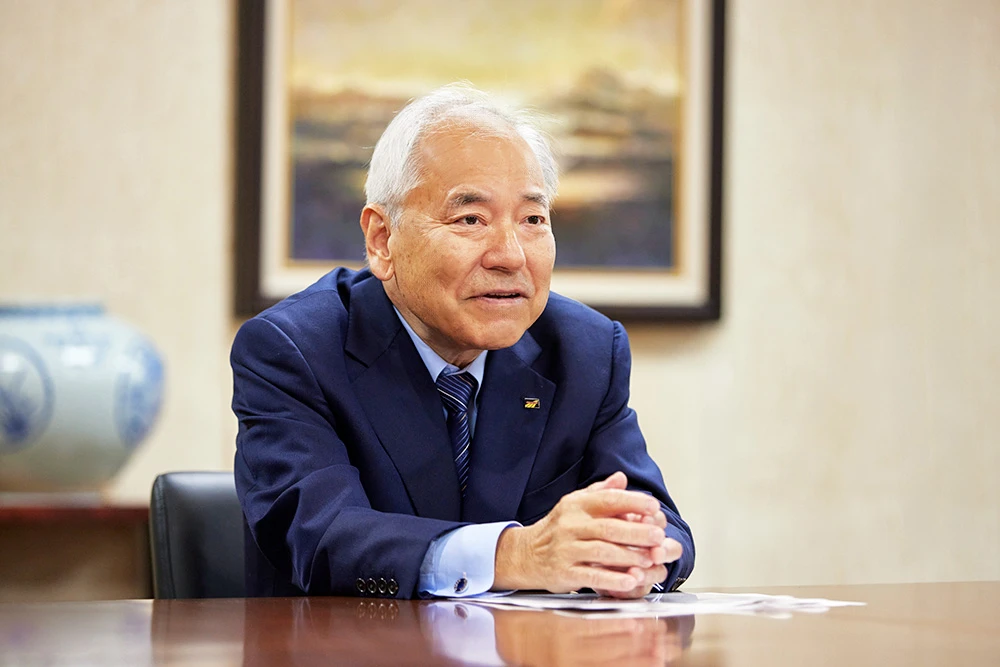
I hear that you worked for Isuzu Motors Limited for the first 10 years of your corporate life. What kind of experience did you have working there?
Inaba
I worked at Fujisawa Plant, engaging in a wide range of processes from stamping and die-making to assembly and engine design.
Gaining hands-on experiences with these various processes shaped my foundation as an engineer. I'm deeply grateful to Isuzu Motors for it.
Effort to develop the world's first product
Behind-the-scenes of the development of electric servo-driven injection molding machines
Yoshida
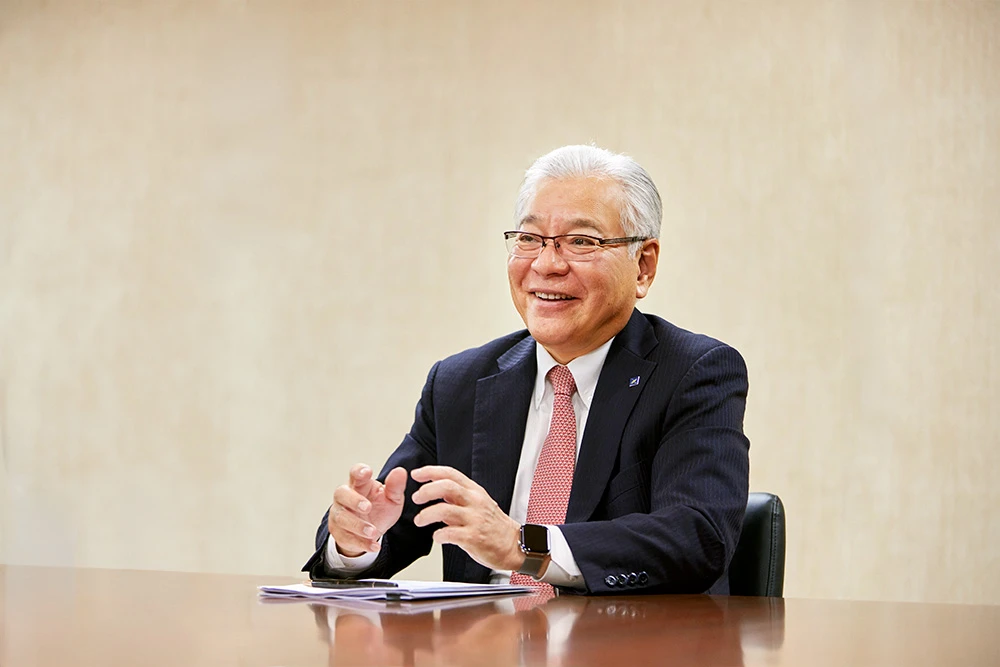
Next, tell us about what happened after you joined FANUC CORPORATION. What was the toughest challenge you ever faced?
Inaba
I guess it was when I was told to develop an injection molding machine right after I joined the company. To be honest, I had no clue where to start. So, I first went to a tradeshow in Germany to learn about the world-class technologies. The president at the time had this idea for joint development with Milacron of the U.S., which was a competitor. So, he offered four of us, myself included, an opportunity to go to America and learn technologies directly from Milacron.
Yoshida
The idea of learning directly from a competitor is interesting.
Are there any unique innovations required to develop a new product?
Inaba
FANUC wanted to shift from hydraulic injection molding machines to electric servo-driven models. While in the U.S., we studied hydraulic machines during the day and drew conceptual diagrams of electric machines on a drafting table in company housing until late at night. We lived like this for three months as we learned about the technologies we needed. And, when we returned to Japan, we were told that we were going to have a presentation event in six months. We suddenly found ourselves tasked with developing and presenting three models whose clamping forces were 30, 50, and 75 tons, respectively. And, all of this had to be done by a small team of seven engineers including new recruits.
Yoshida
Did you succeed in developing those machines?
Inaba
We somehow managed to complete the development of three models by the presentation event in November, and all we had to do next was a press conference. It was then that an unexpected problem occurred. When we were preparing for a test run, one of the machines failed to start. It was due to a minor cause, but I still remember the loud boom I heard when the power turned on, with the footsteps of executives approaching from the back of the plant.
Yoshida
I'm amazed to know what you went through as you developed the world's first electric servo-driven injection molding machines.
FANUC's underlying philosophies
Strict preciseness, transparency, and selection and concentration
Yoshida
As is evident from what you said earlier, I presume that leading a company as big as yours has been challenging in many ways. Tell us what you value most in business.
Inaba
I value FANUC's basic principles - "Genmitsu" (strict preciseness) and "Tomei" (transparency).
For strict preciseness, we should never cut corners.
For transparency, we need to establish clear decision-making criteria.
When we are not sure what to do, we make a decision based on whether it is good or bad for FANUC. As long as we stick to this criterion, we will never regret the decisions we make.
Yoshida
The other day, I took a firsthand look at your testing process. The mindset of your personnel who paid meticulous attention to even the smallest detail really impressed me. I definitely want to see my people follow their example.
Inaba
In addition to the basic principles, we focus on two keywords - selection and concentration - as we do business at FANUC.
"In order to ensure a robust corporate foundation, we select core businesses and concentrate our resources to dig deeper in those areas."
We prioritize longevity over scale, and it's important that we keep our priorities in this order. I believe that, as a result, we now possess a technological depth that other companies cannot match.
Yoshida
Your tireless technological pursuit has made FANUC the company it is today.
"one FANUC" and global collaboration
Organization building for value creation through total optimization
Yoshida
You have a corporate slogan, "one FANUC." Tell us specifically about the activities and ideas related to it.
Inaba
One thing is to work in an integrated manner from the beginning for designing and proposing FA, ROBOT, and ROBOMACHINE products. This is aimed at creating synergy by achieving total optimization, rather than local optimization. The other thing is to provide the same levels of technology and service across the world.
Yoshida
What is the key to ensuring the same levels of technology and service at overseas sites?
Inaba
The key is the standardization of technology and quality. We are now in the process of globalizing our operations to ensure that our overseas affiliated companies deliver the same levels of technology and product support quality anywhere in the world.
Yoshida
A company with many overseas affiliates often has gaps in technology and quality among its divisions. How do you avoid sectionalism?
Inaba
One of the things we do is conduct personnel rotation more frequently, creating a framework for mutual cooperation among lab engineers, plant workers, and salespeople. Our honorary chairman often says "align your efforts," which means that all members of FANUC work together toward common goals.
Yoshida
I see. It's a framework for everyone to work as a unified entity. Some of our customers have their parent companies in the U.S. with their plants operating overseas such as Taiwan, China, and South Korea. It's difficult to do business without integrating operations on a global scale. So, we have similar efforts underway at Tokyo Seimitsu as well.
Measurement and automation for upholding quality
Measurement technology to maintain reliability
Inaba
In addition to standardizing the quality of product support, we are also committed to quality assurance. Product failures can cause the biggest damage to customers. Products should not break down easily, and this notion of reliability matters. Come to think of it, industrial products and mechanical components are premised on accurate measurement. Every single part should be created with a high level of accuracy. At FANUC, we are using 49 coordinate measuring machines. Without these measuring machines from Tokyo Seimitsu, it would have been impossible for us to maintain the level of quality we currently provide.
Yoshida
Thank you. It is our honor to contribute to your effort to maintain quality, which must be the basis for your global expansion.
Inaba
Automating measurement by integrating the coordinate measuring machine into the process has helped us a lot. FANUC is an NC system manufacturer. We use CAM to generate programs, which run machine tools based on 3D CAD data of workpieces. Currently, there is no CAM software that can be used for automatic 3D measurement. I've heard our engineers say that they want CAM software that automatically outputs automatic measurement programs, because they already have 3D CAD data.
Yoshida
We are developing an application that automatically outputs programs, but it is not 100% complete yet. I expect this application to keep evolving further. Ideally, I hope to see a model in which the application automatically does programming based on CAD data that engineers create and upload online.
Bridging Japanese manufacturing to the future
Future roles of GX, AI, and automation
Yoshida
What kind of role do you think FANUC will play in the era of GX and decarbonization?
Inaba
Commitment to the environment has been part of our basic corporate policy. GX is a relatively new initiative. We have been trying to preserve the environment on our premises in order to achieve a higher greening ratio, but that's not enough. The goal is difficult to meet unless we make proactive efforts to reduce GHG emissions. These efforts are now bearing fruit.
Yoshida
We cannot solve environmental issues unless we make conscious efforts.
I think that the use of measurement data and AI integration will gain in importance in future manufacturing. What's your take on this?
Inaba
For example, I want to see measurement programs generated automatically from 3D CAD data, as well as measurement data fed back from the production line to the machine tool for compensation. What's more, AI infers potential causes of changes in dimensions, enabling predictive maintenance based on cutting tool wear and other environmental variations. I hope to accelerate the development of these scenarios. The ideal is to manufacture in the shortest possible time with a necessary and sufficient level of accuracy while avoiding excessive quality.
Yoshida
I see. Grasping the adequate feedback points may reveal what has been invisible. By the way, what is the current status of traceability and feedback to the design process in your company?
Inaba
We put QR codes on cast-metals and other products for identification so that the history of each individual item can be traced on a process-by-process basis. This helps in tolerance design reviews in the design process and avoiding excessive strictness. I want to try to optimize long loops.
Yoshida
Thank you for your interest. That will enable trend management from upstream to downstream for a long loop in the future, and I think automatic feedback will be even more useful to you.
Ensuring the sustained success of Japanese manufacturing
Automation supports the national power and manufacturing infrastructure
Inaba
With the domestic working population shrinking now, automation is key to maintain the manufacturing industry. It may be an extreme joke, but some people say, "Get robots to pay resident tax." This indicates how crucial it is for us to change our perspective in terms of the social system. I think that, in order for Japan to maintain its ability to earn foreign currency, it is important to promote automation across the country and continue to strengthen the manufacturing infrastructure.
Yoshida
I consider it necessary to promote automation and build national resilience in order to maintain Japan's national power and ensure the sustained success of Japanese manufacturing. During the tour of your plant, I saw robots create robots, which reminded me of your honorary chairman consistently saying he had no intention to shift production overseas. We will do our best to propose measuring instruments that are optimal for broadening the potential of the new style of manufacturing that you are seeking to implement.
Tokyo Seimitsu Co., Ltd.
Chairman and CEO
Hitoshi Yoshida
April 1983
Jointed Tokyo Seimitsu Co., Ltd.
April 2002
Executive Officer, Metrology Company
April 2005
Managing Executive Officer, Metrology Company
June 2005
Director
April 2015
President and CEO
April 2022
Chairman and CEO
June 2025
Chairman (to present)
2016
Awarded the ND Marketing Award
2020
Appointed as Chairman of the Japan Precision Measuring Instruments Manufacturers Association (current position)
FANUC CORPORATION Special Advisor
Yoshiharu Inaba
April 1973
Joined Isuzu Motors Limited
September 1983
Joined FANUC CORPORATION
June 1989
Director
June 1992
Senior Vice President (Director)
June 1995
Executive Vice President (Director)
June 2001
Senior Executive Vice President (Representative Director)
June 2003
President (Representative Director)
June 2016
Chairman and CEO (Representative Director)
April 2019
Chairman (Representative Director)
June 2023
Chairman (Director)
June 2025
Retired as Director and appointed as Special Advisor

FANUC CORPORATION
FANUC CORPORATION was established in 1972 as FUJITSU FANUC LTD, which was a spin-off from Fujitsu's numerical control (NC) division.
Centering its business operations around the FA division, which deals with computer numerical control (CNC) systems and servo motors among others, the company has expanded into ROBOT and ROBOMACHINE businesses (small machining centers, electric injection molding machines, etc.) by applying its fundamental technologies.
FANUC CORPORATION is active in applying IoT and AI technologies to all these areas while offering lifetime maintenance for its products. The company helps its customers advance factory automation and streamlining, contributing to the development of manufacturing industries both at home and abroad on a continuous basis.
※Information as of September 2025.
Other User's Voice - CEO Dialogue